
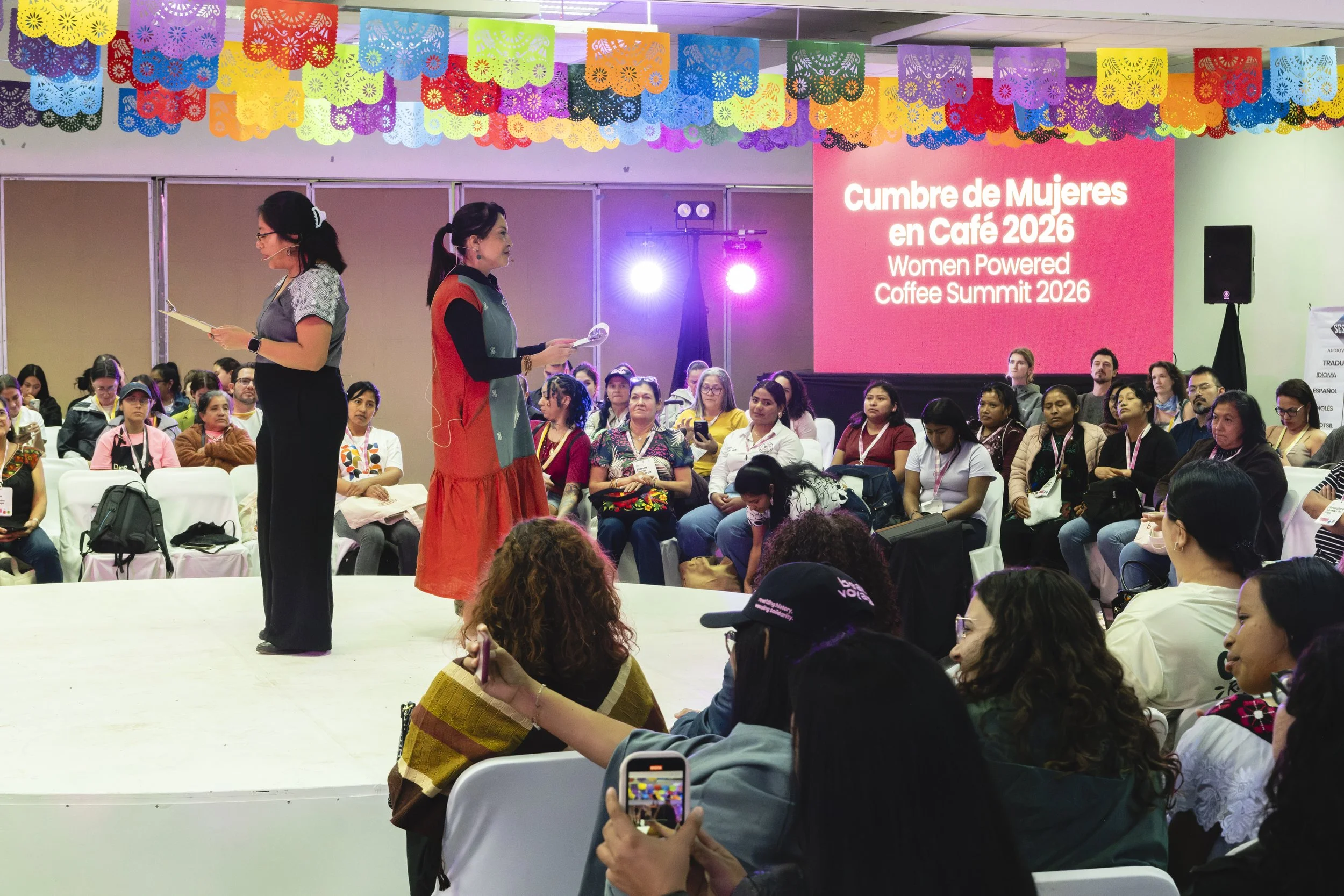
From October 15 to 17, the fifth edition of the Women Powered Coffee Summit took place in one of Mexico’s most emblematic Magical Towns: San Cristóbal de las Casas.
The town’s local museums, cultural centers, coffee shops, and narrow streets served as venues for the different panels and workshops, which this year set out to “Rewrite History and Weave Solidarity.”
The arrival: recognizing one another
Although the Summit officially opened on Thursday, October 15, the Bean Voyage team began welcoming dozens of participants on Wednesday, kicking off a week full of learning and community. Women producers from different communities and countries came together for processing and roasting workshops, and engaged more deeply in the collective learning that followed throughout the week.
“It’s wonderful to welcome people from so many different places here in San Cristóbal and at the café, and to offer these workshops that support both the Summit’s vision and our own at Cafeología: to stop thinking of the industry as something made up of separate parts, and instead see it as a connection among everyone involved in the supply chain. At the end of the day, coffee is people,” said Nidia Rodea, Education Manager at Cafeología, who also hosted the two pre-WPCS workshops in their facility.
Day one: weaving connections
Early Thursday morning, hundreds of people from around the world lined up to register for the Summit and sign up for the different workshops taking place over the following days. There was a palpable sense of excitement and energy outside MUSAC; connections were already beginning to take shape in that very line: women producers, speakers, roasters, baristas, entrepreneurs, and coffee enthusiasts shared stories, contacts, and coffee.
Many of the women producers attending for the second or third time told us how excited they were to be back and how eager they were to return to their communities and share everything they would learn.
Likewise, several speakers told us that although they were nervous about visiting Mexico for the first time, they were very happy to take part in an event so committed to women producers and so focused on creating meaningful connections.
“There is no calibration without collaboration,” said Ellie Dunlop, the first non-binary person to win the Roasting Championship in Germany, speaking about their roasting workshop with women producers.
In the afternoon, participants visited the “Open Doors” spaces around San Cristóbal, an initiative in which our partners Root Capital, KipTik, Impacto Café, Academia de Cacao, Cafeología, Poxna, and Nuup opened their doors to share some of their work with Summit attendees. And although rain took San Cristóbal by surprise, no one missed the screenings of coffee-related films at Singular Cafeína Lab.
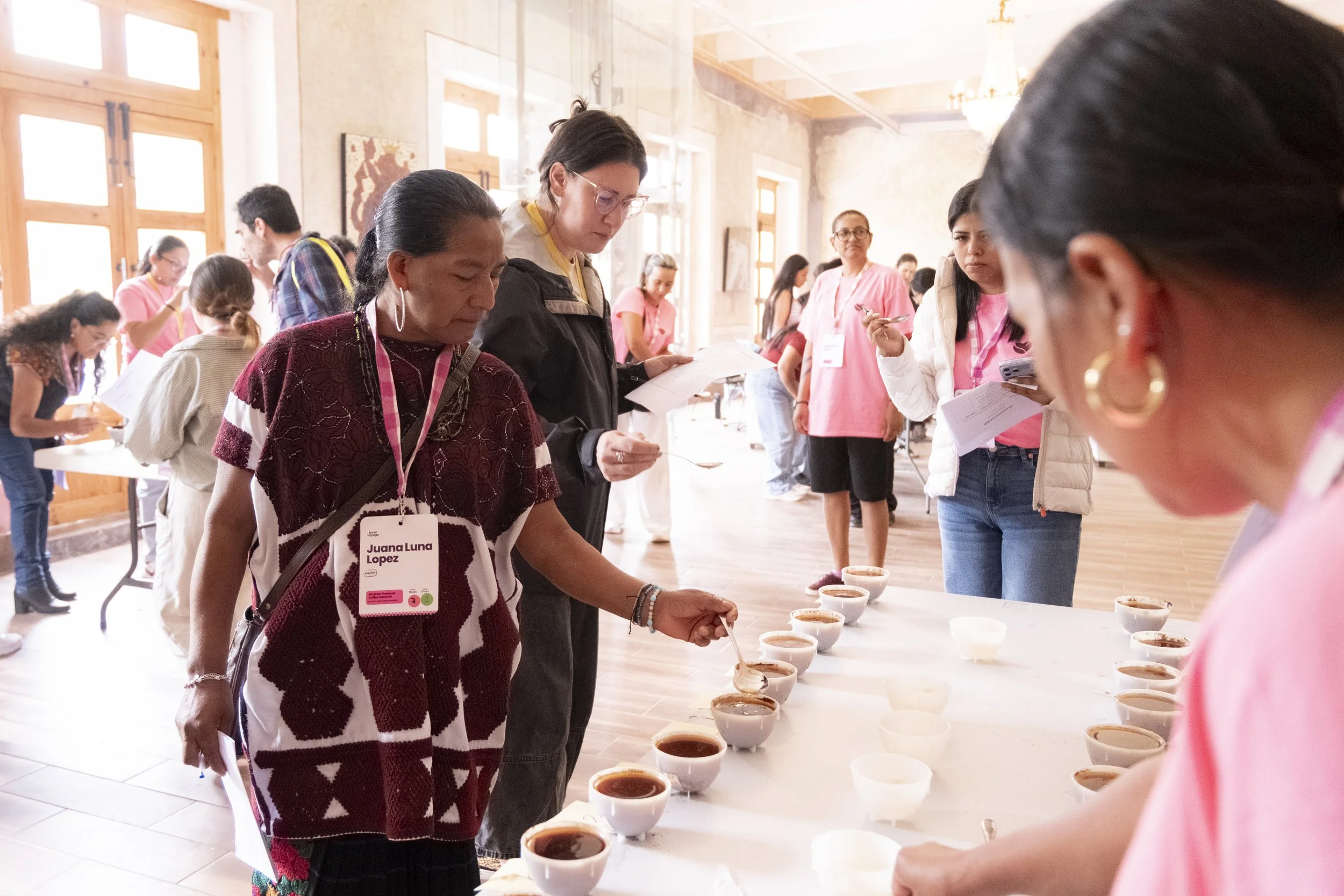
One of the day’s most enriching experiences was the guided cupping, designed for women producers from different countries who were not familiar with the official protocol. Claudia Pedraza and Nayeli Navarro shared coffee samples and explained the steps involved in cupping. At first, some participants said they struggled to identify the tasting notes and felt unsure about sharing their impressions. But as the cups cooled, so did their doubts. More and more participants began to feel comfortable sharing what they noticed in the coffees.
“As women producers, we need to learn how to cup. We cannot leave that work about our own coffee to someone else. Thank you, because now I know how to begin describing my coffee when a buyer asks me what it tastes like,” said Ana Flor Villalobos, a producer from Costa Rica.
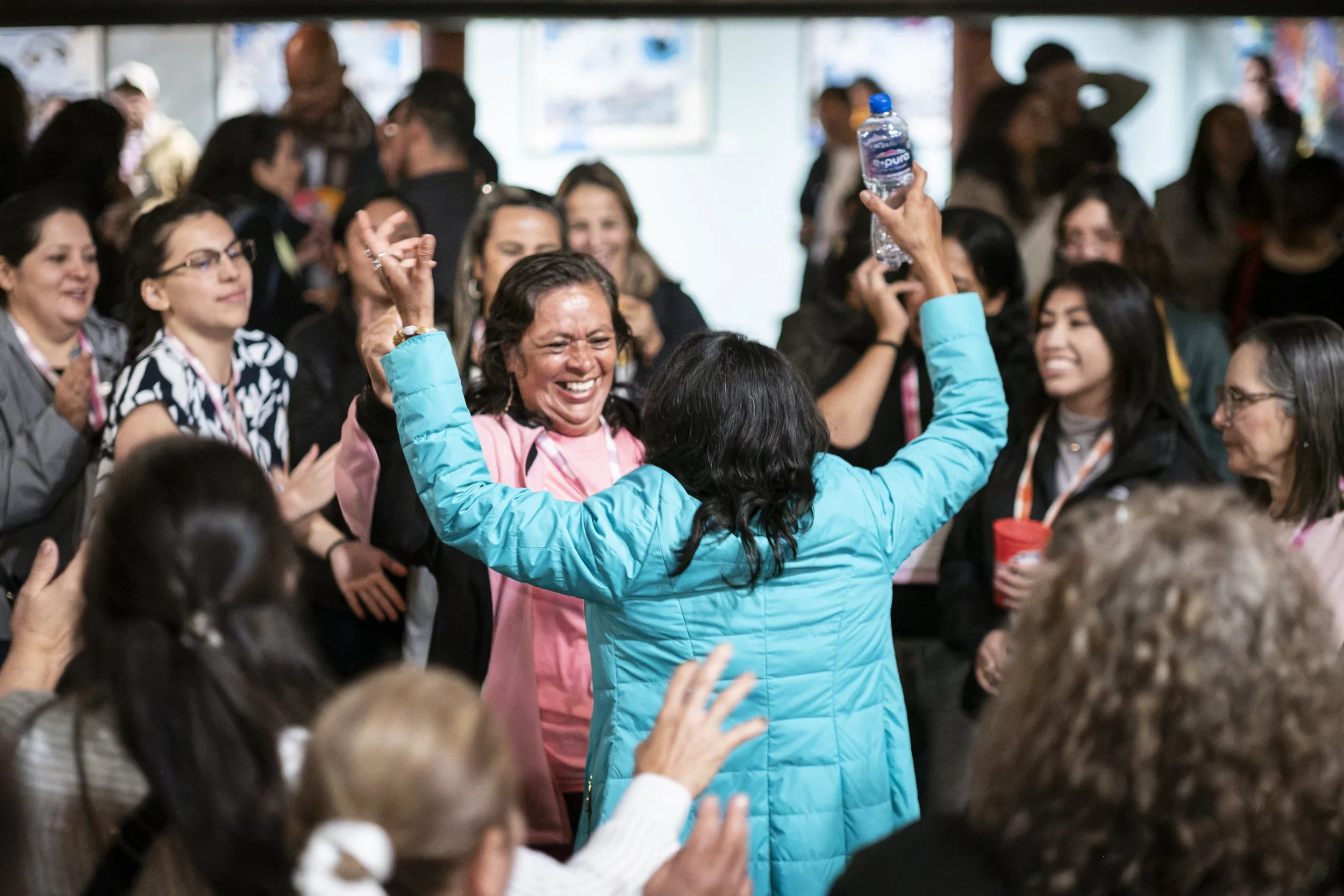
That evening, all the participants came together again for the welcome party at Jules: connections, food, lotería, drinks, and plenty of dancing.
Day two: learning side by side
The day began with a lot of emotion: now we were all here. At the Centro Cultural del Carmen, a circular stage was set, with women producers at the center. The plenary opened with a conversation among Tseltal and Tsotsil women: Juana Luna, Victoria López, Pascuala Gómez, and Juana Aguilar, moderated by Edith Díaz. It was an emotional conversation in which the producers made themselves vulnerable as they shared their stories, their challenges, what hurts them, and what moves them. More than a few tears filled the room; in one word: resilience.
Later, Karla Ly Quiñones and Phyllis Johnson spoke about what it means to rewrite the history of coffee. They questioned the way things are done and, above all, how to begin claiming a place that is ours. Phyllis shared how she has unlearned her definition of success. The moments when she has felt most successful in her career were not those marked by major sales, but rather when she was first invited to share her experience on a stage. Sharing is her success.
“We need to create a space that we know needs to exist,” Phyllis concluded, speaking about the place of women in the coffee industry.
After the plenary sessions, attendees explored the Ideas Marketplace, where 30 people showcased their projects, ranging from coffee to textiles. The Weaving Room also welcomed several women to share different forms of knowledge with one another. The space filled with color, aroma, and diversity.
In the afternoon, everyone headed to the workshop of their choice. Summit participants learned about climate change, coffee analysis, cupping, and even music. That evening, we met again for Happy Hour, where we shared food and Latin music.
Day three and the final day: rewriting history
The day began early and full of energy, thanks to the run through San Cristóbal. Afterward, we gathered for the Summit’s final plenary. Moderated by Kim Tran, Rosalía Trujano and Micaela Hernández exchanged ideas about what solidarity looks like in their different contexts and languages. It was interesting to learn that, even though the word does not necessarily have a direct translation in other languages, all women know its meaning very well because it is one of the ways we tend to support one another. We have learned it through our and others’ actions.
It is also worth mentioning that language is not a barrier at the Summit: the panels are translated in real time for all speakers and attendees.
This was followed by a conversation titled “The Power Hidden in a Cup,” featuring Amy Cosio, Jessica Fuentes, and Georgina Méndez, moderated by Judith Bautista.
Amy spoke about how the quality of a cup also reflects the quality of life of the people who produce it. And the most radical thing we can do in the coffee industry is become more human. “Happy people make good coffee,” she shared.
The way women imagine coffee matters deeply. As Jessica explained, coffee is not just a product, but a value. And all knowledge about coffee matters, no matter who it comes from or where it comes from. “As roasters, experiencing the challenges firsthand in the field helps us better understand the difficulties producers face and stop idealizing life in the countryside,” Jessica explained.
After the conversations, attendees headed to the day’s workshops, where they learned about sensory memory, signature beverages, cup architecture, processing, and fundraising.
At the end, we all gathered again in the town center for the closing event. It was a space filled with powerful, genuine emotions. We heard producers express their gratitude for the experience and their excitement about returning every year to this Summit that changes their lives. We also listened to a beautiful song about origin and solidarity, composed by Loica and several attendees.
One thing we all shared when we arrived at the Summit was the fear and nervousness of being in a place where we did not know whether we belonged…
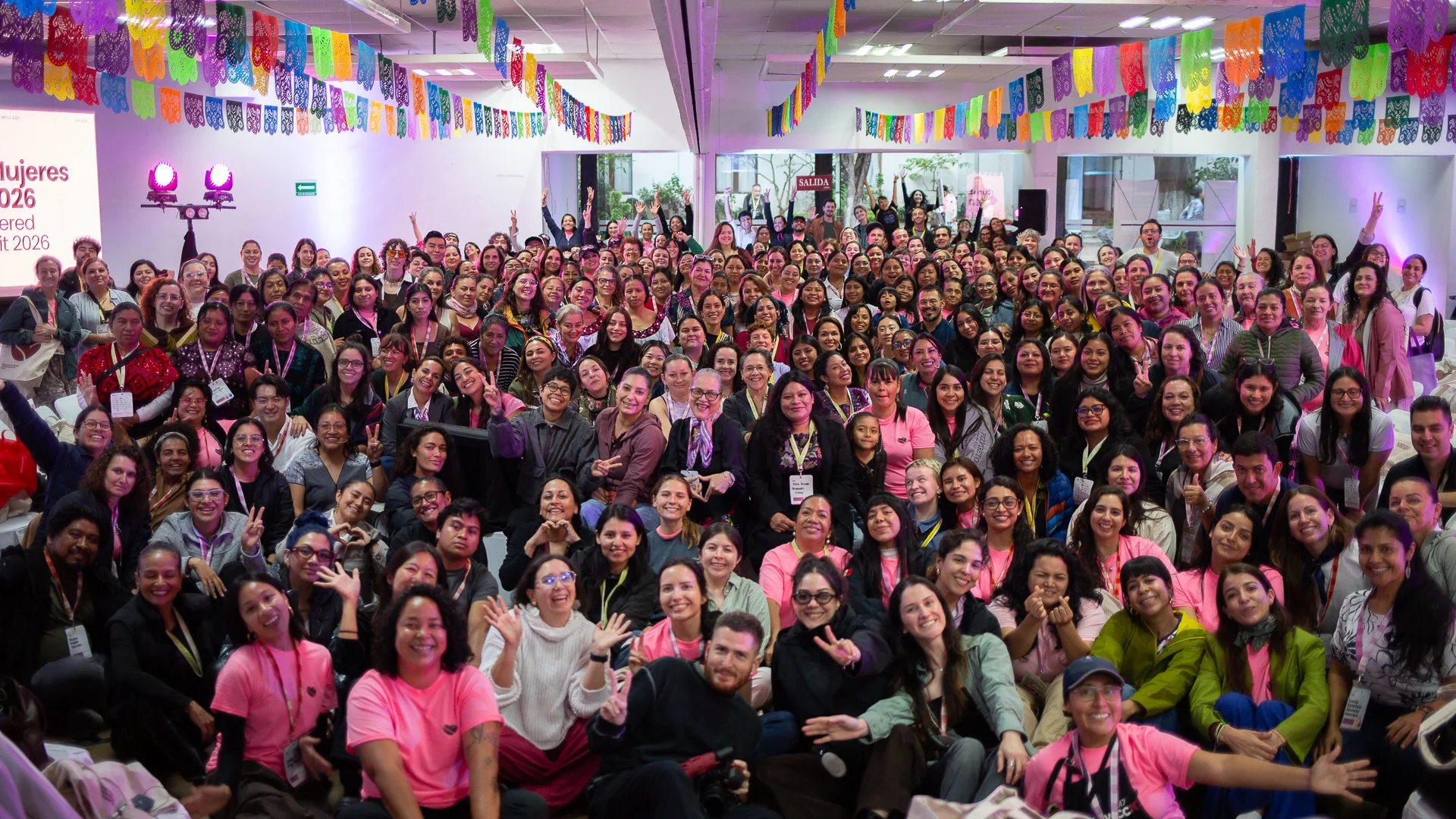
But after three days, we all confirmed that even when we are afraid, we can ask difficult questions and change the way things are done in the coffee industry. The truth is that we all face the same challenges, no matter where we come from. This Summit helped us discover that we are not alone, and that together we can weave stronger and fairer futures for coffee.
“Our freedom begins in our imagination.” — Amy Cosio.
Written by Mariana Gaxiola.
Del 15 al 17 de octubre se llevó a cabo la quinta edición de la Cumbre de Mujeres en el Café en uno de los pueblos mágicos más emblemáticos de México: San Cristóbal de las Casas.
Los museos locales, los centros culturales, las cafeterías y las calles estrechas de la ciudad sirvieron como sedes para los distintos paneles y talleres, que este año se propusieron «Reescribir la historia y tejer solidaridad».
La llegada: reconocernos
Si bien la Cumbre empezó el jueves (15 de octubre), desde el miércoles el equipo de Bean Voyage recibió a decenas de personas para dar inicio a una semana llena de aprendizaje y comunidad. Varias productoras de distintas comunidades y países se reunieron para tomar talleres de procesamiento y tueste, y participar más de lleno en el aprendizaje colectivo que siguió durante la semana.
“Es muy bonito recibir a personas de tantos lados aquí en San Cristóbal y en la cafetería, y ofrecer estos talleres que impulsan tanto la visión de la Cumbre como la nuestra en Cafeología: dejar de pensar en la industria como algo separado, sino en una conexión entre todos los actores de la cadena. Al final el café somos gente” - contó Nidia Rodea, Gerente de Educación en Cafeología, que también fue anfitrión de los dos talleres previos a la WPCS en sus instalaciones.
Primer día: tejiendo conexiones
El jueves desde temprano cientos de personas de todo el mundo se formaban para registrarse en la Cumbre y anotarse en los diferentes talleres de los siguientes días. Se sentía mucha emoción y euforia afuera del MUSAC; las conexiones empezaban a tejerse desde aquella fila: productoras, ponentes, tostadoras, baristas, emprendedoras y entusiastas compartían historias, contactos y café.
Muchas de las productoras que venían por segunda o tercera edición nos contaban su entusiasmo por la experiencia y las ganas de volver a sus comunidades para compartir todo lo que aprenderían.
Asimismo, las diferentes ponentes nos confesaron que aunque estaban nerviosas por pisar México por primera vez, estaban muy contentas de participar en un evento tan comprometido con las productoras y tan enfocado a las conexiones reales.
“No existe la calibración sin la colaboración”, mencionó Ellie Dunlop, la primera persona no binarie en ganar el Campeonato de Tueste en Alemania sobre su taller de tueste con productoras.
Por la tarde las participantes visitaron las “Puertas Abiertas” alrededor de San Cristóbal, una dinámica donde nuestros aliados Root Capital, KipTik, Impacto Café, Academia de Cacao, Cafeología, Poxna y Nuup abrieron sus puertas para compartir un poco de lo que hacen con las asistentes de la Cumbre. Y aunque la lluvia sorprendió a todo San Cristóbal, nadie faltó a las proyecciones de piezas cinematográficas con café en Singular Cafeína Lab.
Una de las experiencias más enriquecedoras del día fue la cata guiada, dirigida a productoras de diferentes países que no estaban familiarizadas con el protocolo oficial. Claudia Pedraza y Nayeli Navarro compartieron muestras de café y explicaron los pasos para catar. Aunque algunas mencionaron que no lograban detectar las notas y sentían duda de compartir en un inicio, conforme las tazas se enfriaban las dudas también. Y cada vez eran más las participantes que se animaban a compartir sus impresiones sobre los cafés.
“Nosotras como productoras debemos aprender a catar. No podemos dejarle a alguien más ese trabajo sobre nuestro café. Gracias porque ya sé cómo empezar a describir mi café cuando algún comprador me pregunta a qué sabe”, agradeció Ana Flor Villalobos, productora de Costa Rica.
Por la noche, todas las participantes volvieron a reunirse para la fiesta de bienvenida en Jules: conexiones, comida, lotería, bebida y mucho baile.
Segundo día: aprender de la mano
El día empezó con mucha emoción: ahora sí estábamos todas. En el Centro Cultural del Carmen se montó un escenario circular, con las mujeres productoras en el centro. La plenaria inició con una conversación de mujeres tseltales y tsotsiles: Juana Luna, Victoria López, Pascuala Gómez y Juana Aguilar, moderada por Edith Díaz. Fue un conversatorio emotivo, donde las productoras se vulneraron contando sus historias, sus retos, lo que les duele y lo que les mueve. Más de un sollozo envolvió el lugar; en una palabra: resiliencia.
Más tarde Karla Ly Quiñones y Phyllis Johnson hablaron sobre cómo se ve reescribir la historia del café. Cuestionaron cómo se hacen las cosas y, sobre todo, cómo empezar a reclamar un lugar que es nuestro. Phyllis contó cómo ha desaprendido lo que es el éxito para ella, pues cuando más exitosa se ha sentido en su carrera no es con grandes ventas, sino cuando la invitaron por primera vez a compartir su experiencia en un escenario. Compartir es su éxito.
“Necesitamos crear un espacio que sabemos que necesita existir”, concluyó Phyllis sobre el lugar de las mujeres en la industria del café.
Después de las plenarias las asistentes se pasearon por el Mercado de Ideas, donde 30 personas exponían sus proyectos: desde café hasta textiles. De igual forma el Weaving Room recibió a varias mujeres para compartir distintos saberes entre ellas. El lugar se llenó de color, aroma y diversidad.
Por la tarde cada quien se fue al taller de su elección. Las participantes de la Cumbre aprendieron sobre cambio climático, análisis de café, cata y hasta música. Por la noche nos volvimos a encontrar para la Happy Hour donde compartimos comida y música latina.
Tercer y último día: reescribiendo la historia
El día empezó temprano y con mucha energía, gracias a la carrera por San Cristóbal. Después nos dimos cita en la última plenaria de la Cumbre. Con Kim Tran como moderadora, Rosalía Trujano y Micaela Hernández intercambiaron ideas sobre cómo se ve la solidaridad en sus distintos contextos e idiomas. Fue interesante aprender que, aunque la palabra no necesariamente tiene una traducción directa en otras lenguas, todas las mujeres conocemos muy bien su significado, porque es una de las formas en que solemos sostenernos. La hemos aprendido a través de nuestras acciones y de las de otras.
Cabe mencionar que el idioma no es una barrera en la Cumbre; los paneles se traducen en tiempo real para todas las ponentes y asistentes.
Después hubo un conversatorio sobre “El poder que se esconde en una taza”, con Amy Cosio, Jessica Fuentes y Georgina Méndez, moderado por Judith Bautista.
Amy mencionaba cómo la calidad de una taza habla también de la calidad de vida de las personas que lo producen. Y lo más radical que podemos hacer en la industria del café es hacernos más humanos. “La gente feliz hace buen café”, compartió.
Y es que cómo las mujeres imaginan el café es muy importante. El café, contaba Jessica, no es solo un producto sino un valor. Y todo conocimiento que existe del café vale, sin importar de quién venga o de dónde venga. “Como tostadores, vivir los retos directamente en el campo nos ayuda a entender mejor las dificultades que atraviesan los productores y dejar de idealizar el campo”, explicaba Jessica.
Después de los conversatorios las asistentes se fueron a los talleres del día, donde aprendieron sobre memoria sensorial, bebidas de autor, arquitectura de la taza, procesos y recaudación de fondos.
Al final nos volvimos a encontrar en el centro para el evento de clausura. Fue un espacio donde se vivieron emociones muy fuertes y reales. Escuchamos a productoras agradecidas con la experiencia y emocionadas de volver cada año a esta Cumbre que les cambia la vida. También escuchamos una hermosa canción sobre el origen y la solidaridad compuesta por Loica y varias asistentes.
Algo que compartimos todas en la Cumbre cuando llegamos fue el miedo y el nerviosismo de estar en un lugar donde no sabíamos si pertenecíamos...
Pero después de tres días todas confirmamos que aún con miedo, podemos hacer las preguntas difíciles y cambiar cómo se están haciendo las cosas en la industria del café. La realidad es que todas atravesamos los mismos retos sin importar de dónde venimos. Esta Cumbre nos sirvió para descubrir que no estamos solas y que juntas podemos tejer futuros más fuertes y justos para el café.
“Nuestra libertad empieza en nuestra imaginación” - Amy Cosio.
Escrito por Mariana Gaxiola.
See you again soon! | Nos vemos de nuevo pronto!
