SCA Sustainability Award Acceptance Speech
On April 10, 2026, Bean Voyage received the Specialty Coffee Association's Sustainability Award.
The process involved rigorous reviews by seasoned industry leaders in the field of sustainability, and it is a true honor to follow in the footsteps of past winning organizations like Root Capital, which we deeply admire at Bean Voyage. We feel incredibly honored and humbled. Below is the speech the team worked on together, which our CEO and co-founder, Sunghee Tark, delivered on stage.
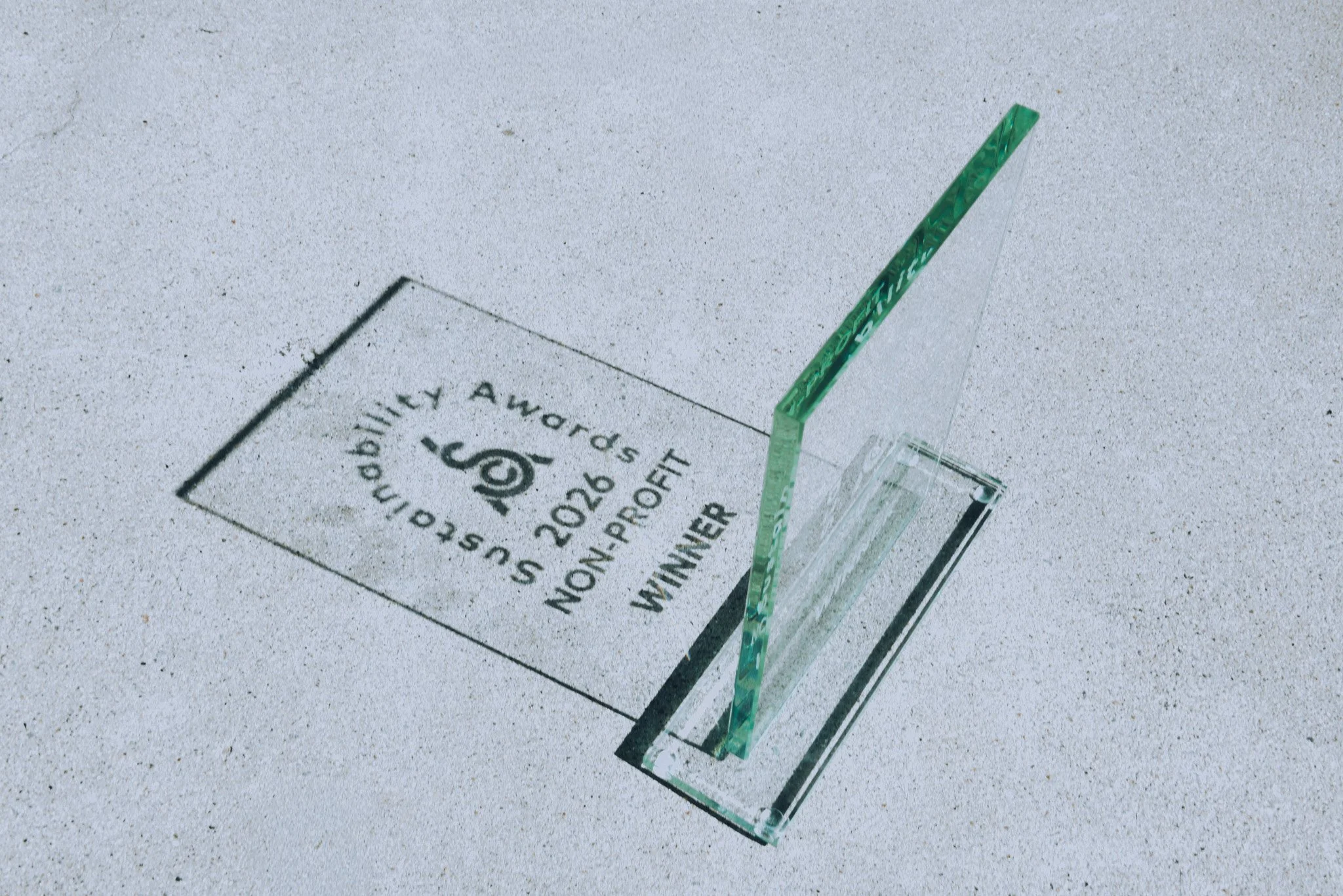
Photo: Alexa Romano
Thank you for this award, and for the generous words, Andrés.
When my team and I heard we'd be giving this speech, we asked ourselves: what do we actually want to say? Do we go Oscar-style — thank everyone who believed in us? Do we talk about our model, our numbers, our impact?
We decided we wanted to tell you a story. The story of the farmer who planted the seed of Bean Voyage — and who, to this day, continues to push us to do better.
Her name is Ericka Mora.
Ericka lives in San Marcos, Tarrazu, Costa Rica, where she runs Café EyF — an artisanal farm producing some of the most extraordinary honey-processed coffee you will ever taste. Sugarcane. Caramel. Grapefruit. Green tea. A cup that takes your breath away.
But in 2015, Ericka lost her leg to bone cancer. And the income she was earning from coffee was not enough to cover her medical care. Not enough to support her family. Not enough, frankly, for the quality and the volume of work she and her family were putting into that land.
Abhi, and I met Ericka in 2016 — fresh out of college, still figuring out what Bean Voyage even was — and she was the first farmer to believe in us. She and her husband Rubén, and their three daughters, opened their farm and their lives to us. That trust humbles us to this day.
At the time, despite being a third-generation coffee farmer, Ericka had never tasted the best of her own coffee. She had heard about micro-mills. She saw neighbors starting their own, earning more by selling processed green beans instead of raw cherries. But the pathway to that wasn't clear. How do you price it? How do you process it? What does the market want, and how do you speak its language? There were so many unknowns — and very limited resources, limited training available, and the very real fear of walking into a room full of men who had been doing this for years.
She held on to her dream anyway.
What she needed was someone to show her what her coffee was actually worth. And that's where this community came in. A friend volunteered to host a cupping workshop. For the first time, Ericka tasted her own coffee — scored it, named it, understood its potential. She learned the language of a buyer. She went back to her farm and got to work.
And what happened next is why we do this work. Ericka went from selling raw cherries into the commercial market — to processing her own roast-ready beans and selling them to the world. Her income tripled. She got the rehabilitation care she needed. Along with her daughters, she managed the processing, built a marketing plan, kept the books, while her husband worked the land.
Tatiana, one of Ericka's daughters, told me something I think about often. She said she is grateful that her mother now gets a salary. That the labor her mother had been giving freely for years — without recognition, without her name on it — is now hers. She has savings in her name. She has power in her hands.
Her family didn't just survive. They built something. And they are building it still, for those three daughters.
Ericka's story is not an exception. It is a pattern — a pattern the coffee industry has normalized for too long.
Seven out of every ten hands on a coffee farm belong to women. Seven out of ten. They plant it. They harvest it. They process it. They raise the families that make the farms run. And yet women own only 20–30% of the land. They are often invisible to governments, to policy, to the market. Their labor underwrites a billion-dollar industry — and millions of them still live below the poverty line.
In our ten years, we have seen real progress. More investment in women producers. Supply chains beginning to reckon with climate resilience. Initiatives that go beyond awareness into action. That progress is real, and it matters.
And it is not enough.
Because the system was built on colonialism, on extraction, on the assumption that the people closest to the land should have the least power over it. When we talk about sustainability in this industry, we have to ask ourselves the question someone once put to me plainly: what exactly are we trying to sustain? If it is the system as it is — then no, it is not worth sustaining.
To us, sustainability is what Ericka and her family are dreaming of and building toward.
It is what hundreds of thousands of farming communities across the world are fighting for — against economic volatility, against climate risk, against a market that still does not fully see them.
What we need to sustain is their hope, their dreams, and their ability to keep going. And it is on the rest of us — this industry, this room — to share the burden, to mitigate the risks, and to show up as the partners these coffee producing communities actually need.
—
We have a dream at Bean Voyage.
It is a coffee market that actively seeks out women-powered coffee and pays a fair price for it. A market that understands that being a woman, being indigenous, and being on the frontlines of climate change are not separate hardships but compounding ones — and that the price in the cup must reflect that reality. An ecosystem so strong and so self-sustaining that one day it no longer needs us at all.
We are ten years old, bold, and still learning. But we know the model works.
—
We have our own story with this community. We walked into our first SCA event in 2019 not knowing a soul. And you welcomed us. You made time. You took a chance on relationships before they made financial sense. That is the same thing Ericka did for us — showed up, opened a door, and trusted that what was on the other side was worth it.
We are asking you to do that now for the farming communities who are still waiting for that door to open.
This award belongs to the communities we partner with. We accept it in their name — and as an invitation to keep doing what you did for us, and what Ericka did for us. At scale, and with urgency.
Thank you.
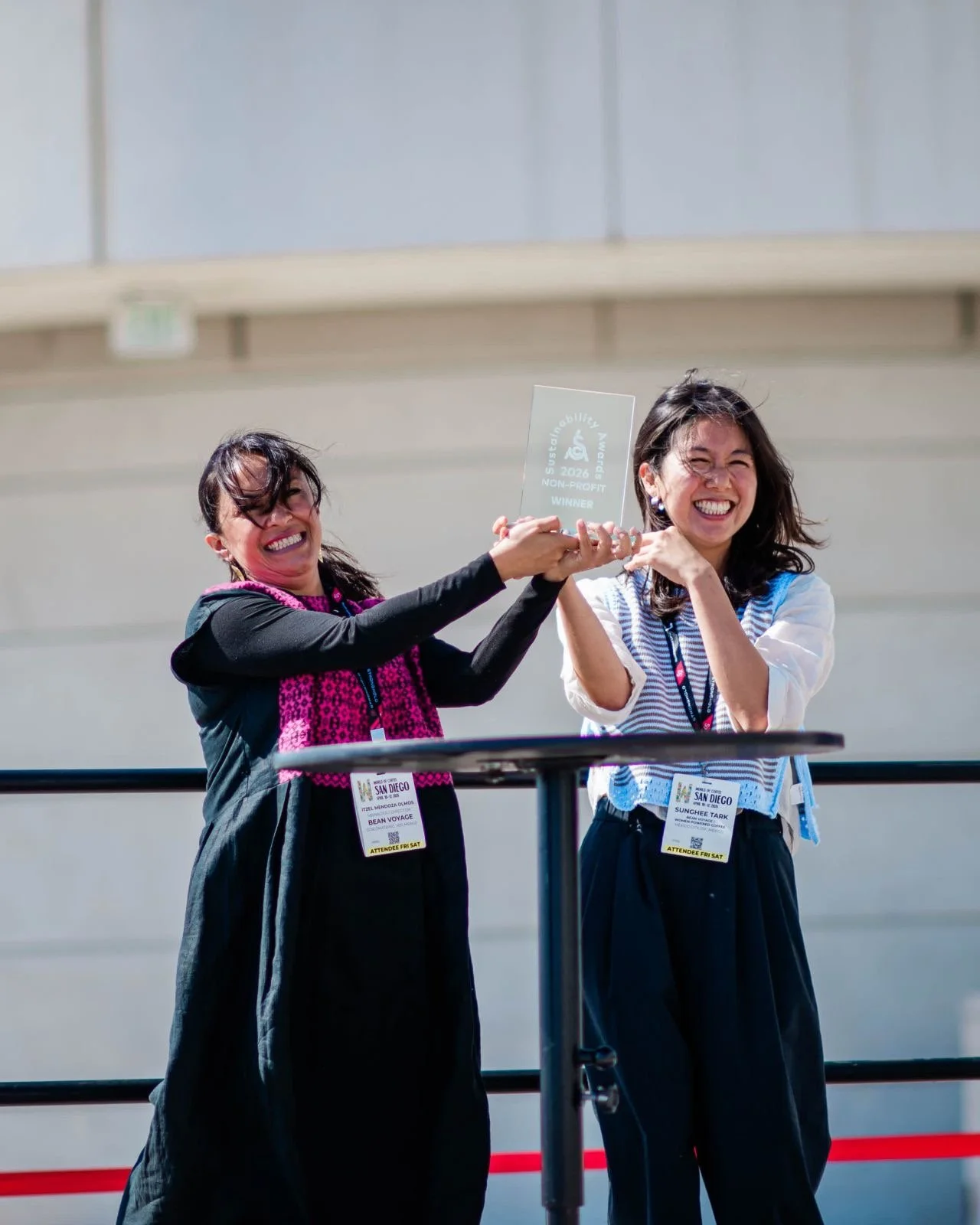
Itzel (Head of Mexico) and Sunghee (CEO & Co-founder) accepting the Award at WoC San Diego on behalf of the team | credit: Specialty Coffee Association
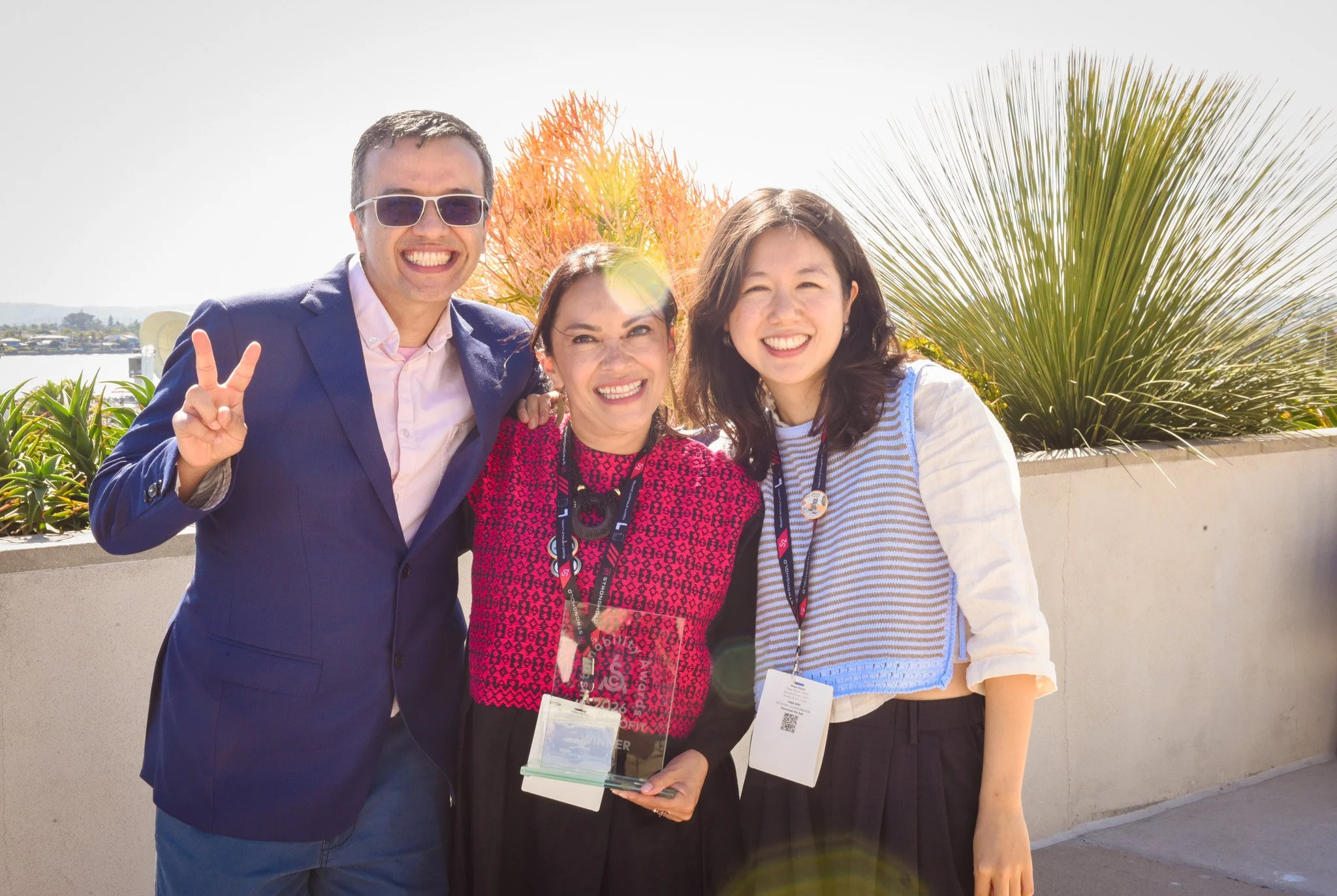
Andres (SCA Sustainability Director) with Itzel and Sunghee | credit: Alexa Romano
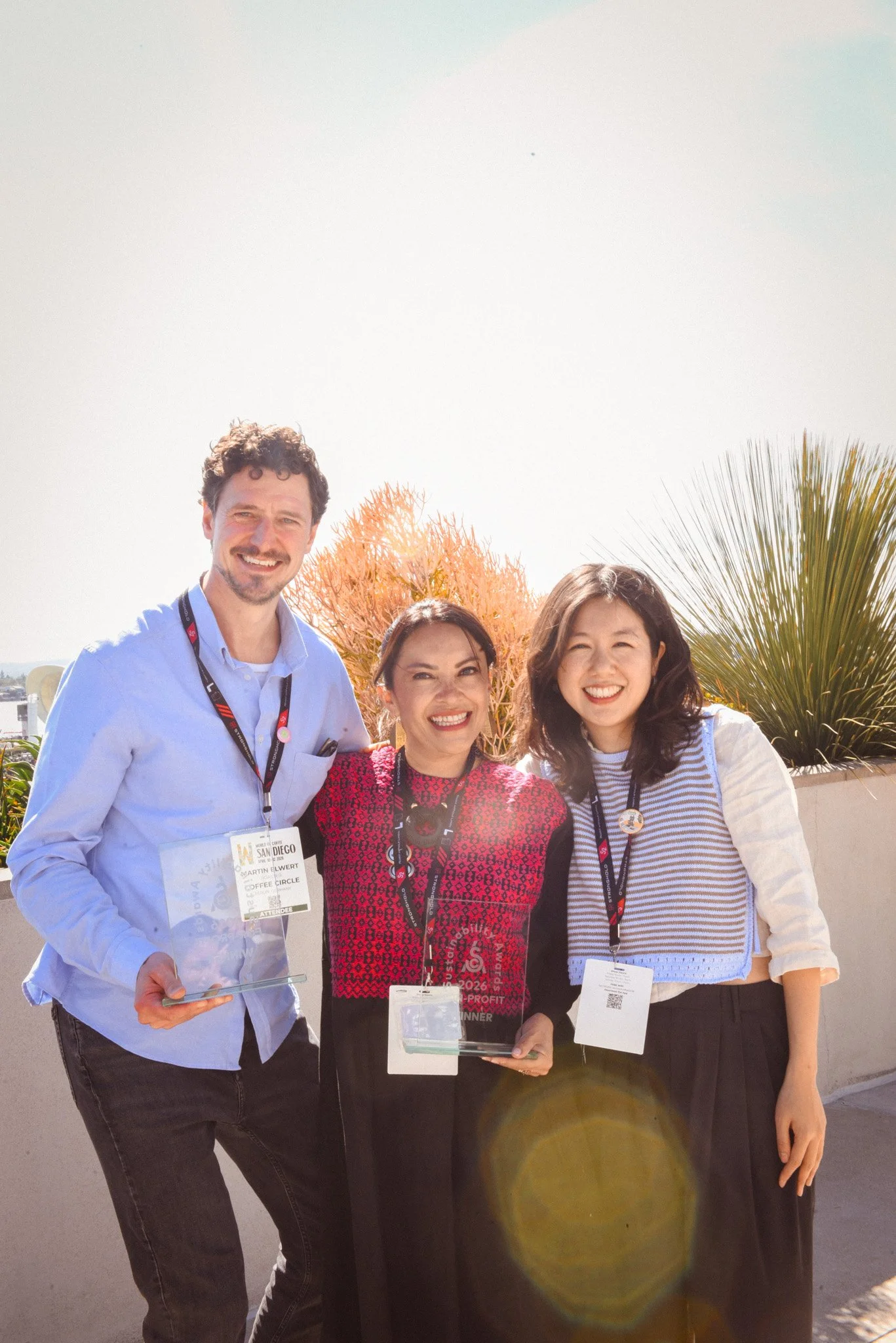
Martin (CEO of Coffee Circle, winner of SCA Sustainability Award - For Profit Category) along with Itzel and Sunghee | credit: Alexa Romano
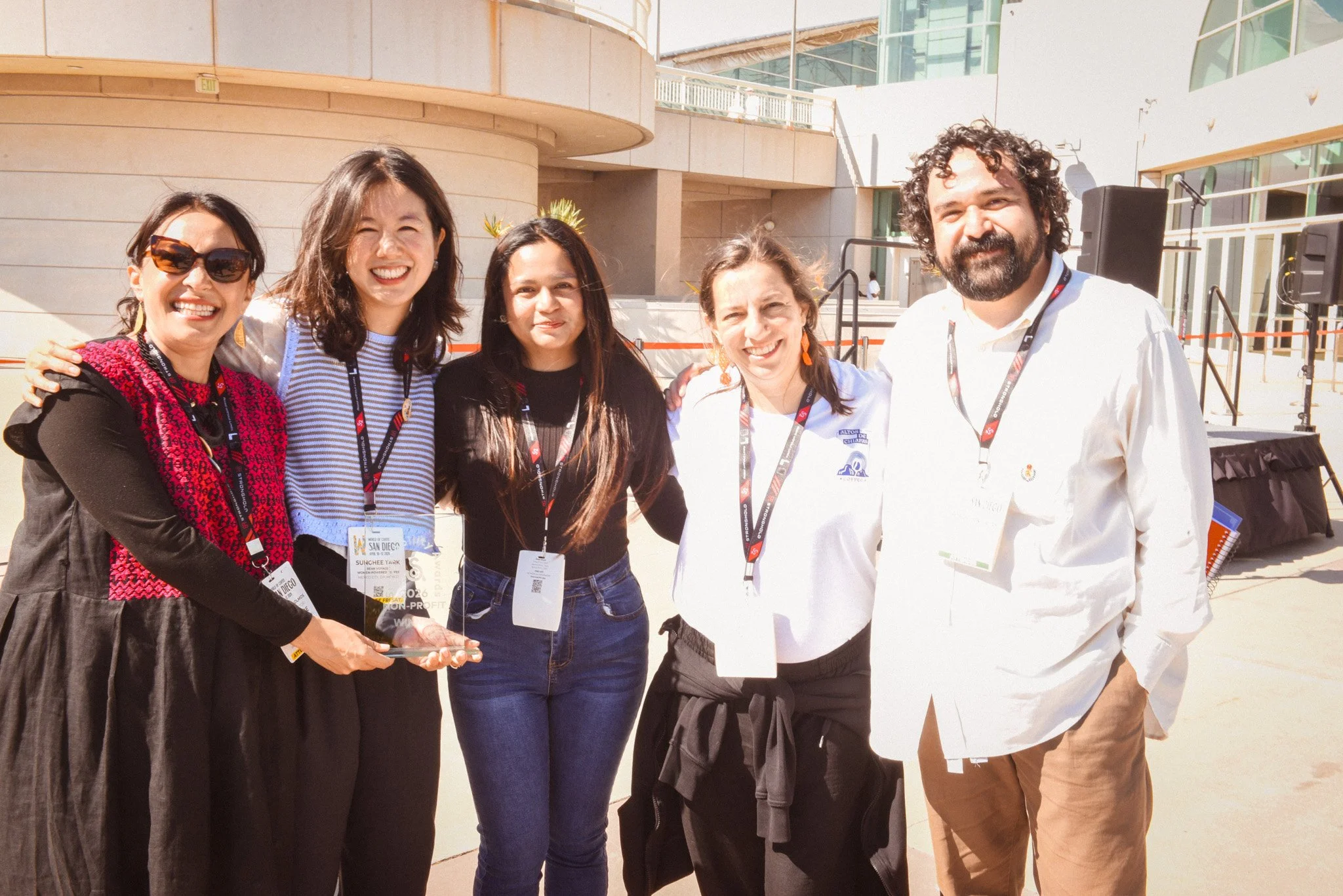
Itzel, Sunghee, Emilia (Cafe Kulatik, local org based in the highlands of Chiapas), Pilar (program director at Nuup, NGO working with smallholder farmers in agri-sector in Mexico) and Sebastian (Program Officer, W.K Kellogg Foundation) | credit: Alexa Romano